
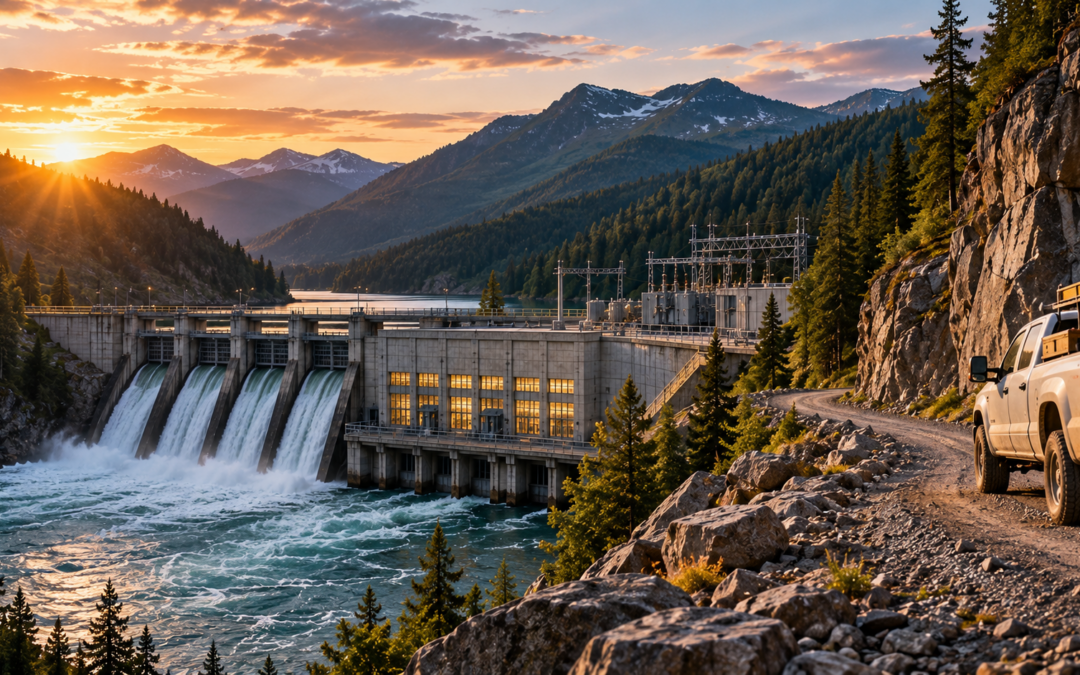
Imagine a hydroelectric power plant tucked into a mountain canyon, miles from the nearest town. The facility has been operating reliably for decades, its equipment is well maintained, and its owners have taken every precaution to keep operations running smoothly.
Then, one afternoon, a critical transformer fails.
Under normal circumstances, replacing the equipment would already be a significant undertaking. But there’s another problem: the only access road is narrow, the nearest specialized repair crew is several hours away, and transporting a replacement transformer requires equipment that cannot easily reach the site.
Suddenly, a mechanical failure becomes a much larger operational and financial challenge.
For owners of small and medium hydroelectric facilities, location can be just as important as equipment condition when evaluating risk. Remote locations offer advantages for energy generation, but they also introduce challenges that can affect insurance coverage, emergency response, and recovery costs.
Why Remote Locations Create Unique Risks
Hydroelectric facilities are often built where water resources and elevation changes make power generation possible. These locations may be ideal for producing electricity, but they aren’t always convenient for maintenance, repairs, or emergency response.
Unlike a manufacturing facility located in an industrial park, a remote hydroelectric plant may have limited access to roads, utilities, emergency services, and specialized contractors.
These challenges can create several potential risks:
- Longer emergency response times
- Limited access for heavy equipment and repair crews
- Increased transportation costs for replacement machinery
- Communication difficulties during emergencies
- Greater exposure to landslides, flooding, and road closures
- Extended operational downtime following equipment damage
While many of these concerns can be managed through preparation, they deserve special attention when developing an insurance and risk management strategy.
When a Small Equipment Failure Becomes a Major Expense
Not every expensive insurance claim begins with catastrophic damage.
Consider a hypothetical situation involving a small hydroelectric facility located in a mountainous region.
A generator component fails, requiring replacement. The part itself is available, but transporting it to the facility requires specialized equipment. The access road must be inspected before the delivery vehicle can safely reach the plant, and the repair crew must coordinate transportation and temporary accommodations.
What initially appeared to be a manageable repair could now involve additional expenses and weeks of lost production.
For plant owners, the financial consequences may include more than the cost of replacing damaged machinery.
Depending on the circumstances, there may also be transportation expenses, specialized labor costs, continuing operating expenses, and lost revenue.
This is why understanding the full cost of recovering from an equipment failure is so important.
Insurance coverage should be evaluated with these potential complications in mind, particularly when determining property values, equipment breakdown protection, and business interruption limits.
Emergency Response Isn’t Always Minutes Away
When an emergency occurs at a remote energy facility, response times can be significantly different from those at a plant located near a major population center.
Fire departments, medical responders, utility crews, and emergency contractors may need additional time to reach the property.
Weather conditions, seasonal road closures, and difficult terrain can further complicate access.
For hydroelectric operators, having a well-developed emergency response plan is especially important.
An effective plan should address:
- Emergency contact information and communication procedures
- Clear directions and access instructions for first responders
- Alternative access routes when available
- Emergency shutdown procedures
- On-site safety equipment and employee training
- Coordination with local emergency services
Facility owners should periodically review these plans and ensure employees understand their responsibilities during an emergency.
The Overlooked Importance of Access Roads
One of the most easily overlooked vulnerabilities of a remote hydroelectric plant may be the road leading to it.
Access roads are essential for routine maintenance, equipment deliveries, emergency response, and major repairs.
But what happens when a landslide blocks the only road to the facility?
Or when flooding washes out a bridge needed to transport heavy equipment?
Even if the plant itself remains undamaged, restricted access can make repairs or normal operations difficult.
Owners should evaluate the condition and reliability of their access routes, particularly when those routes cross steep terrain, waterways, or areas vulnerable to erosion.
It’s also important to understand who owns and maintains the roads, bridges, and other infrastructure needed to reach the facility.
From an insurance perspective, damage to an access road does not automatically mean lost revenue or repair costs will be covered. Coverage depends on the policy’s insured property, covered causes of loss, and any applicable access-related provisions or endorsements.
Specialized Repairs Require Specialized Planning
Hydroelectric facilities rely on equipment that often requires highly specialized technical knowledge.
Turbines, generators, transformers, switchgear, and control systems aren’t always serviced by local repair companies.
In some cases, the nearest qualified technician may be located in another state.
For older facilities, sourcing replacement parts can be even more complicated if equipment is no longer manufactured or requires custom fabrication.
Plant owners can reduce these challenges by identifying critical equipment and developing relationships with qualified repair providers before an emergency occurs.
Maintaining accurate equipment records, identifying replacement-part suppliers, and understanding expected delivery timelines can make a significant difference during recovery.
Some operators may also benefit from keeping essential spare components on-site when practical.
How Remote Locations Affect Insurance Underwriting
Insurance companies evaluate a variety of factors when determining the risk associated with an energy facility.
While equipment values, operating history, and maintenance practices are important, geographic location and accessibility may also influence underwriting decisions.
Insurers may consider:
- Distance from fire protection and emergency services
- Road access and seasonal accessibility
- Exposure to natural hazards
- Availability of specialized repair services
- Facility security and monitoring
- Maintenance and inspection practices
- Emergency preparedness procedures
A remote location doesn’t necessarily mean a facility will be difficult or expensive to insure.
However, insurers may want additional information about how the operator manages the risks associated with that location.
Providing clear documentation of maintenance procedures, emergency planning, and access arrangements can help demonstrate that these exposures are being managed responsibly.
Business Interruption Coverage Deserves Special Attention
For remote hydroelectric facilities, one of the most important insurance considerations is the potential length of an operational shutdown.
Business interruption insurance can help address qualifying lost income and continuing expenses following a covered loss.
However, determining appropriate coverage requires more than estimating how long a repair should take under ideal conditions.
Owners should consider how location could affect the restoration timeline.
For example, a repair that might take two weeks at an easily accessible facility could take substantially longer if specialized equipment must be transported through difficult terrain or if seasonal conditions restrict access.
Business interruption coverage should be reviewed carefully to understand applicable waiting periods, limits, exclusions, and the period of restoration.
Not every operational shutdown qualifies for coverage, and delays caused solely by transportation or access issues may not be insured unless the policy provides applicable protection.
Technology Can Help Bridge the Distance
Modern monitoring and communication technology can make remote hydroelectric operations more manageable.
Remote monitoring systems allow operators to track equipment performance, identify unusual operating conditions, and receive alerts without always being physically present at the facility.
Depending on the plant’s configuration, these systems may help identify potential problems before they become major failures.
Technologies worth considering include remote equipment monitoring, automated alarms, security cameras, backup communication systems, and condition-monitoring sensors.
Although these systems require investment and maintenance, they can support earlier problem detection and more efficient response planning.
Operators should also account for cybersecurity, communication outages, and system reliability when adopting remote monitoring technologies.
Five Questions Every Remote Hydroelectric Plant Owner Should Ask
Understanding your facility’s geographic vulnerabilities doesn’t require waiting for an emergency.
Start by asking:
- How quickly could emergency responders reach our facility? Consider different weather conditions and times of year.
- What happens if our primary access road becomes unavailable? Identify alternative routes and determine who is responsible for maintaining critical access infrastructure.
- How long would it take to replace our most important equipment? Factor in manufacturing, transportation, specialized labor, and site accessibility.
- Do our insurance limits reflect realistic recovery timelines? Review equipment breakdown and business interruption coverage with your insurance professional.
- Are our emergency plans and equipment records up to date? Make sure employees, contractors, and emergency responders have the information needed to respond effectively.
These questions can help reveal operational vulnerabilities that might otherwise go unnoticed.
Protecting Your Plant Starts With Understanding Its Location
Every hydroelectric facility has its own characteristics, and no two locations present exactly the same risks.
A plant located near a major highway may face very different challenges from one accessible only by a mountain road. A facility with nearby repair contractors may recover from an equipment failure more quickly than one that depends on specialists traveling long distances.
Understanding these differences is an important part of developing an effective insurance strategy.
At Energy Insurance & Bonds, we specialize in insurance solutions for the energy industry, including small and medium hydroelectric facilities throughout the United States.
With decades of experience working with hydroelectric plant owners, we understand that protecting an energy facility involves more than insuring its machinery and buildings. It requires understanding how the entire operation works, where vulnerabilities exist, and what it may take to recover from an unexpected loss.
Whether your hydroelectric plant is located near a major city or deep in a remote mountain canyon, having insurance coverage tailored to your operation can help protect your investment and support long-term reliability.
Contact Energy Insurance & Bonds to discuss your facility’s unique exposures and explore insurance options designed for your operation.